Queue Management System: 7 Industries Winning in 2026
Waiting is the one experience every customer shares, and almost no one enjoys. That is why a well-designed queue management system has become a quiet competitive weapon in 2026. From hospitals to telecom shops to drive-thru lanes, organisations that master the wait are winning loyalty that marketing budgets cannot buy.
Rather than focus on a single sector, this article tours seven industries and shows how smart queuing reshapes each one. Along the way you will see which features matter where, and how to choose a system that fits your audience.
Why the Wait Defines Your Brand
Customer experience is built from small moments, and the queue is one of the most emotionally charged. A confusing line signals disorganisation before a customer even reaches your counter. A calm, guided wait signals competence and respect for their time.
Modern platforms turn that moment into data. They capture arrival patterns, service speeds, and abandonment rates, giving managers the insight to staff smarter and serve faster.
The Core Benefits in Brief
- Shorter perceived waits through clear status and updates.
- Higher staff productivity driven by live dashboards.
- Fewer walkaways because customers know their turn is coming.
- Actionable analytics that expose real peak hours.
Seven Industries, Seven Wins
The same core technology flexes to fit wildly different environments. Here is how seven sectors put queuing to work.
1. Healthcare
Clinics replace crowded waiting rooms with appointment-based tickets, reducing anxiety and infection risk while keeping patients informed.
2. Banking
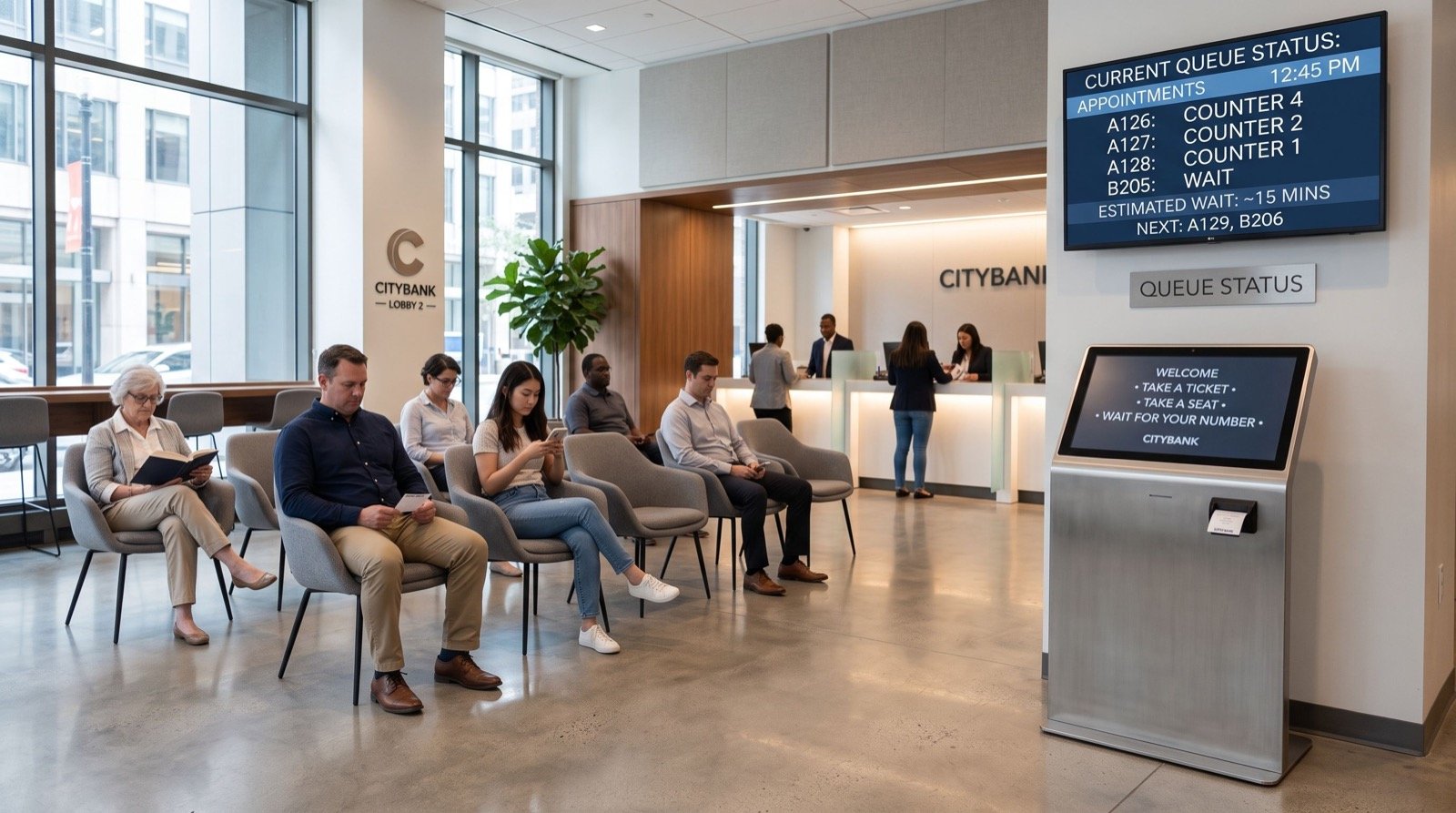
Branches route customers to the right specialist, so a simple deposit never waits behind a complex loan consultation.
3. Telecom Retail
Phone stores handle browsing, billing, and repairs in separate streams, matching each visitor to the right expert quickly.
4. Government Services
Public offices cut notorious queues with pre-booking and digital tickets, raising citizen satisfaction measurably.
5. Restaurants and Drive-Thru
Quick-service brands sequence both counters and lanes. A reliable HME drive thru in saudi arabia keeps audio crisp and cars flowing, while indoor queuing manages mobile-order pickups.
6. Retail and Pharmacy
Service desks for returns and prescriptions run on ticketing, freeing shoppers to browse until called.
7. Education
University admissions and fee counters smooth out enrolment-season surges with virtual lines and clear signage.
Comparing System Types
Not every venue needs the same setup. The table below maps common formats to the environments they suit best.
| System Type | Best For | Key Strength |
|---|---|---|
| Ticket-and-display | Banks, clinics | Simple, proven flow |
| Mobile virtual queue | Retail, telecom | Freedom to roam |
| Appointment booking | Government, healthcare | Predictable demand |
| Drive-thru sequencing | Restaurants | Vehicle throughput |
How Do You Choose the Right System?
Picking a platform starts with your customers, not the catalogue. Follow a simple decision path to avoid overspending on features you will never use.
- Define the journey. List every point where people wait.
- Pick the format. Match ticket, mobile, or appointment to your crowd.
- Check integration. Confirm it links to your existing software.
- Demand analytics. Insist on reporting you will actually read.
- Plan for growth. Choose a system that scales with you.
For sourcing, installation, and training, work with trusted professionals who have deployed across several of these industries and understand the quirks of each.
From Data to Better Decisions
The quiet superpower of modern queuing is the data it generates. Every ticket, every served customer, and every abandoned wait becomes a record. Over weeks, those records reveal patterns that no manager could spot by eye, such as the Tuesday afternoon lull that lets you cut staff, or the Friday surge that demands two extra counters.
Smart teams act on these signals. A bank learns that loan consultations clog mornings and nudges them to quieter afternoons. A hospital discovers that a single check-in desk causes most of its delays and splits the function in two. The system does not just organise the wait; it teaches the organisation how to run better.
Measuring Return on Investment
Leaders rightly ask what the technology returns. The honest answer is that savings come from several directions at once: reduced walkaways, leaner staffing matched to real demand, and higher satisfaction that drives repeat visits. Track abandonment rate and average wait before and after launch, and the payback period usually becomes clear within a few months.
Avoiding Common Pitfalls
Plenty of deployments underperform, almost always for predictable reasons. Teams buy more features than they use, skip staff training, or ignore the analytics the system works hard to produce. Treat the rollout as a change-management project, not just a hardware purchase, and you sidestep the traps that sink lesser efforts.
Another frequent misstep is treating the launch as the finish line. A queue system is a living tool that rewards regular review. Revisit the dashboard monthly, compare it against your service goals, and retune staffing and signage as traffic patterns shift through the year.
Blending Physical and Digital Journeys
The strongest 2026 deployments erase the line between online and in-person. A customer books a slot on their phone, receives a reminder, parks, and walks straight to a counter that already expects them. Telecom stores and clinics lead this trend, linking their booking apps directly to the in-branch queue so the handoff feels seamless. That continuity, more than any single gadget, is what customers remember and reward with their return.
The Standard Behind Good Queuing
Accessibility and fair service are not optional extras. Guidance from bodies like the W3C Web Accessibility Initiative reminds designers that digital tickets, displays, and kiosks must work for every customer, including those using assistive technology. A truly inclusive queue is both faster and fairer.
Frequently Asked Questions
What is a queue management system in simple terms?
It is a mix of hardware and software that organises how people wait, assigning each customer a clear position and giving staff live data to serve them faster.
Which industry benefits most from queuing technology?
Any sector with unpredictable foot traffic gains, but healthcare, banking, and government services often see the most dramatic improvement in satisfaction scores.
Can one system cover both indoor queues and a drive-thru?
Yes. Unified platforms sequence indoor counters and outdoor lanes together, so mobile orders, dine-in guests, and cars all move in coordination.
Is mobile queuing better than paper tickets?
It depends on your audience. Mobile queues let customers roam freely, while paper tickets suit venues where many visitors prefer a simple, tangible option.
Turn Waiting Into Winning
Across every sector, the message is the same: the brands that respect customer time earn lasting loyalty. A modern queue management system, paired with proven drive-thru technology, transforms your slowest moment into a signature strength. Assess your customer journey today and choose the solution that fits your 2026 goals.